Quilombola Communities in Bahia
ENGENHO DA PONTE QUILOMBOLA COMMUNITY
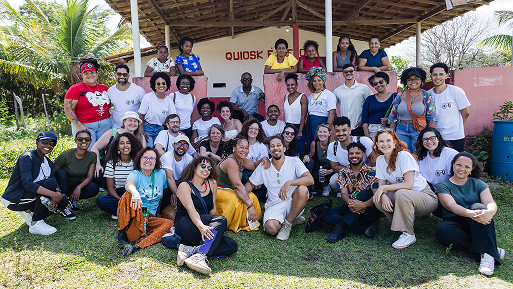
The Engenho da Ponte quilombo community is located in the Iguape Basin and Valley region, in the municipality of Cachoeira, Recôncavo da Bahia, an area with a strong quilombo presence marked by centuries of resistance. Formed by about 35 self-declared black families, the community organises itself collectively, sharing cultural, religious and festive traditions and ways of life passed down from generation to generation.
Their livelihood is linked to family farming, fishing, shellfish gathering and handicrafts, always based on cooperation. Production is artisanal, without the use of pesticides, valuing productive sectors such as oysters and beekeeping. This work reinforces the importance of food sovereignty and environmental preservation in an ecologically sensitive territory.
Spirituality occupies a central place in community life and is directly intertwined with mental health care practices. The rituals conducted in the terreiros, the use of teas and medicinal herbs, and collective prayers are forms of welcome and protection that strengthen emotional balance and social cohesion. These practices, shared by ancestors, serve as references for well-being and coping with suffering, especially in the face of difficulties imposed by structural racism and the absence of adequate public policies.
Even when resorting to institutional medicine, this movement is usually mediated by spiritual legitimacy, which highlights a unique integration between traditional knowledge and formal services, reaffirming the quilombola identity and broadening the horizon of care.
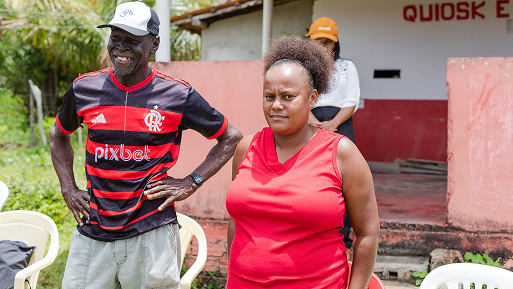
In recent years, the Engenho da Ponte Quilombola Youth Collective has expanded this repertoire, reframing its engagement with the territory in light of the impacts of environmental racism, such as the contamination of the Paraguaçu River, which affects fishing, shellfish gathering and the health of the community itself. These young people mobilise biointegration strategies, articulating denunciation, memory and the reinvention of practices, reaffirming the quilombola identity and the centrality of the territory in the production of life.
The Engenho da Ponte quilombola community also faces challenges common to communities in the region: difficulties in accessing education, health and infrastructure, as well as delays in the titling of their lands. Even so, it stands out for its capacity for collective organisation and its struggle in the Quilombola Council of the Iguape Basin and Valley, which brings together the 18 quilombola communities in the region to defend their rights and demand the implementation of public policies.
The community remains a space of resistance, memory and collective involvement, sustained by its ancestry and the strength of community life.
Ancestral Tide
The quilombo is an open sea,
deep and alive, a burning wheel of memories, of times:
the echoes of the ancestors resonate,
guiding the people
in the tide of history
and the continuous struggle that navigates even in storms.
At the crossroads of the waters,
between crossings, songs and drums,
they continue,
celebrating life,
the strength of the collective.
Rosane Jovelino