


COMMUNITY ENGAGEMENT
The ORÍ Group is deeply committed to involving community members in all stages of its activities in Brazil. From the outset, we have adopted the principle that guides our practice: ‘no research about us without us.’ This means that each phase of the research—from methodological construction to the implementation of interventions—is developed in a participatory manner, side by side with the quilombola and urban communities with which we work.
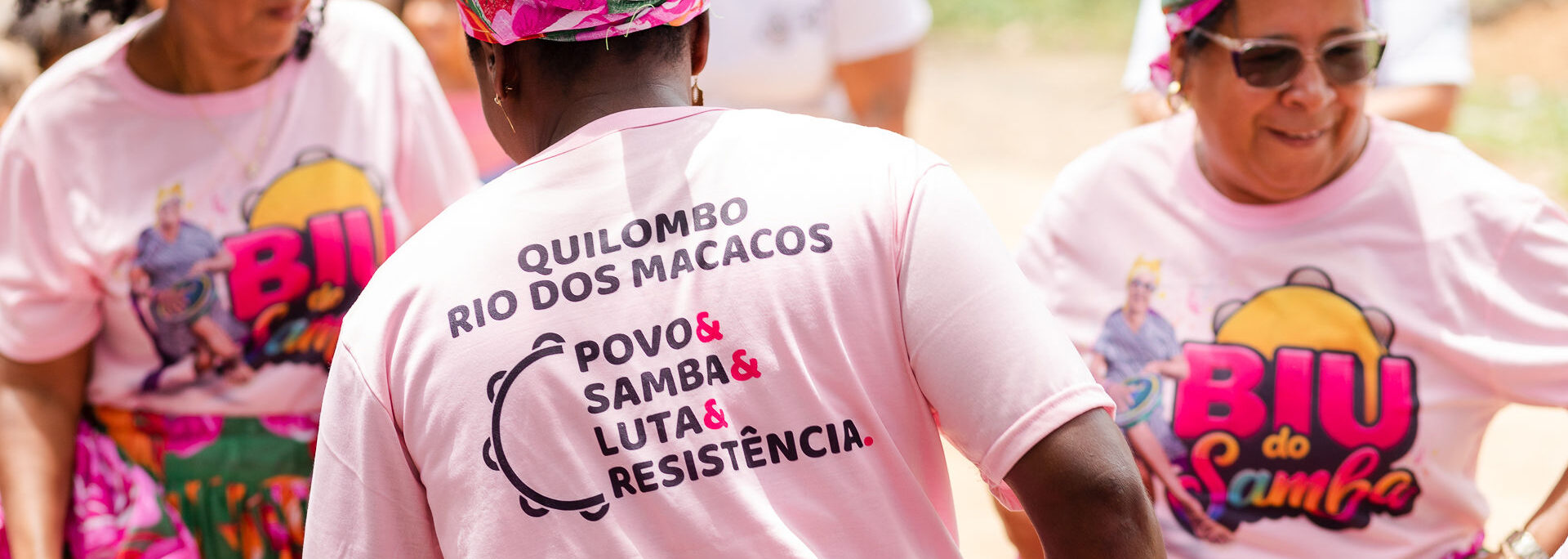
Community engagement requires, first and foremost, recognising and engaging in dialogue with the various actors that make up each territory. In the quilombola communities of Bahia and in Heliópolis in São Paulo, this involves quilombolas, local residents, students, families, health professionals, community leaders, civil society organisations, representatives of educational institutions, cultural collectives, religious leaders and other social agents. The diversity of these interlocutors ensures that ORÍ is constructed in a pluralistic manner, respecting different points of view, experiences and knowledge.
Field visits and face-to-face meetings conducted by the research team are essential for establishing bonds of trust and creating spaces for listening. More than just gathering information, these moments allow us to understand the daily challenges of racism, social inequality and exclusion in access to mental health care, while revealing the local strategies of care, solidarity and resistance that already exist in these territories.
In ORÍ, we recognise and value the knowledge produced by communities — whether ancestral, cultural, spiritual or practical — and seek to articulate it with academic, biomedical and anthropological knowledge. This combination of perspectives enables the co-creation of new knowledge, which will serve as the basis for the development of culturally sensitive and sustainable interventions.
Our commitment is to avoid single, standardised models of engagement. Each community has its own history, identity and modes of organisation, and it is in this respect for uniqueness that ORÍ finds its strength. Community engagement, therefore, takes different forms in each territory, but with the same goal: to work in partnership with communities, recognising them not as objects of research, but as protagonists and partners in the process of social transformation.