Co-Investigators

Carlos Alberto Santos de Paulo

Carlos Alberto Santos de Paulo

Adjunct Professor at UFRB, affiliated with the Centre for Health Sciences. Former Vice-Dean of Affirmative Action and Student Affairs, PhD (2014) and MSc (2002) from the University of Brasília. Research member of the integrated research and technical cooperation programme in Community, Family and Health: Subjects, Contexts and Public Policy (FASA). Former professor at the Catholic University of Brasília.

Carolina Gaia

Carolina Gaia

XXXXXXXXXXXXXXXxxxx

Clarice Sandi Madruga

Clarice Sandi Madruga

Psychologist (PUCRS, 2000), Master’s degree in Neuroscience (UFRGS, 2003) and Psychology with an emphasis on Chemical Dependency (Sussex University, 2006). PhD in Psychiatry and Medical Psychology (UNIFESP and King’s College London, 2012). She is a researcher and affiliate professor in the Department of Psychiatry at UNIFESP, coordinating the National Alcohol and Drug Survey (LENAD) and the Survey of Drug Use in Capital Cities (LECUCA). She also works as a researcher at SPDM and Instituto Ame Sua Mente.

Clarice Santos Mota

Clarice Santos Mota

Full professor at the Institute of Collective Health at UFBA and deputy coordinator of the Integrated Community, Family and Health Programme (FASA). Postdoctoral degree from the University of York (2016), PhD in Sociology (UFBA, 2007) and Master’s degree in Collective Health (UFBA, 2003). She conducts research and outreach on the health of the black population, vulnerable communities, neglected diseases, environmental racism, social movements in health, and quilombola and terreiro communities.

Cláudia Mascarenhas

Cláudia Mascarenhas

Psychoanalyst and writer, she is the founder and clinical director of Instituto Viva Infância (BA), an organisation dedicated for 19 years to providing free care to children and families in vulnerable situations, also working in advocacy and promotion of diverse childhoods. She has a specialisation in Infant Psychopathology from the Université de Paris Nord and in Epistemology of Psychoanalysis from UNICAMP. She holds a Master’s degree in Philosophy of Science (UNICAMP) and a PhD in Clinical Psychology (USP), with postdoctoral training in Public Health from UFBA (ISC). She is currently a mental health consultant for the Brazilian Society of Paediatrics (SBP).

Diana Anunciação Santos

Diana Anunciação Santos

Adjunct professor at the Federal University of Recôncavo da Bahia (UFRB) and coordinator of the Professional Master’s Degree in Black and Indigenous Population Health at the same institution. Graduated, master’s and doctorate in Social Sciences (UFBA) and post-doctorate in Collective Health (UFBA). Deputy director of the Brazilian Association of Collective Health (ABRASCO), coordinating the Racism and Health Working Group. Researcher at FASA, NUSSAN, NEGRAS and NUCLEAR, working on topics such as traditional communities (quilombolas), family farming, collective memory, violence, institutional racism and the health of the black population.

Henrique Teruo Akiba

Henrique Teruo Akiba

Psychologist and Doctor of Psychology from the University of São Paulo (USP). He is a postdoctoral researcher in the Department of Psychiatry at EPM/UNIFESP and a professor of neuroscience and applied psychology in postgraduate courses. He works as a mental health consultant and researcher at the Ame Sua Mente Institute.

Jeane Tavares

Jeane Tavares

Xxxxxx

Joilda Silva Nery

Joilda Silva Nery

Biomedical degree from the State University of Santa Cruz (2007), master’s degree (2011) and doctorate (2016) in Public Health from ISC/UFBA and postdoctoral degree from Fiocruz. She is an adjunct professor and deputy director of ISC/UFBA, as well as a permanent lecturer at PPGSC-UEFS. Deputy coordinator of the Integrated Programme of Epidemiology and Health Impact Assessment on Populations (ISC/UFBA). She works in the fields of epidemiology and public health, with an emphasis on neglected diseases, tuberculosis, leprosy and the health of the black population.

Jorge Assis

Jorge Assis

XXXXXxxx

Laíse Rezende de Andrade

Laíse Rezende de Andrade

Xxxxxxx

Monique Esperidião

Monique Esperidião

Associate Professor at the Institute of Collective Health at the Federal University of Bahia. She holds a PhD in Public Health from the Federal University of Bahia (2009), a Master’s degree in Community Health (2004), and a degree in Psychology (2002), also from the Federal University of Bahia. She is a researcher at the Directory of Health Policy, Planning and Management (CNPq) and at the Observatory of Health Policy Analysis (OAPS-ISC/UFBA). She has experience in the field of Collective Health, with an emphasis on Health Evaluation, Health Policy Analysis, and Mental Health. She is a member of the Coordinating Group of the Health Policy, Planning and Management Commission of ABRASCO. She currently serves as the coordinator of the Graduate Program in Collective Health at the Institute of Collective Health of the Federal University of Bahia.

Papreen Nahar

Papreen Nahar

Professor of Medical Anthropology and Global Health at the Department of Global Health and Infection, Brighton and Sussex Medical School, University of Sussex. She has over twenty years of research experience in women’s health and global health. Her work examines infertility through the lens of inequality and justice, focusing on gender, intersectionality, and social exclusion in South Asia and beyond. Her 2022 Routledge book, based on ethnographic research on childless women’s suffering and resilience, is among the earliest scholarly works on infertility in South Asia. Using qualitative and co-design approaches, her research also addresses Neglected Tropical Diseases (NTDs) and antimicrobial resistance (AMR) across regions including South Asia, East Africa, Central Europe, and the UK.

Rodrigo Bressan

Rodrigo Bressan

Psychiatrist with training in epidemiology and neuroscience and a PhD in Molecular Neuroimaging from King’s College London. Professor and researcher at UNIFESP, he coordinates PROESQ and LiNC, groups dedicated to the study and care of people with schizophrenia and bipolar disorder. One of the founders of PRISMA, the first clinic in South America focused on the prevention of serious mental disorders. Conducts research in psychopharmacology, neuroimaging, genetics, and biomarkers, and is involved in mental health promotion initiatives, such as the educator training programme at Instituto Ame Sua Mente.

Sandra Assis Brasil

Sandra Assis Brasil

Psychologist (UFBA), lecturer and researcher at the Department of Life Sciences, State University of Bahia (UNEB). Master’s degree in Community Health and PhD in Public Health, both from the Institute of Public Health, UFBA. Permanent lecturer in the Professional Master’s Degree in Public Health (MEPISCO), UNEB, as well as collaborating with the Multiprofessional Health Residency Programme (Mental Health). Works in the areas of mental health, black population health, childhood, racism and HIV/AIDS.

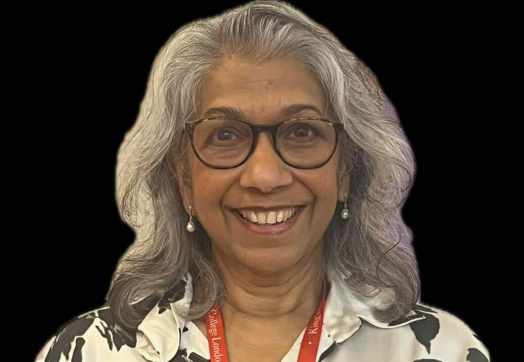
Seeromanie Harding

Seeromanie Harding

Professor of Social Epidemiology at King’s College London. Her research focuses on social and ethnic health inequalities across the life course, international comparative studies, and community-based interventions in low-resource settings. She holds a PhD in Epidemiology, an MSc in Medical Demography, and a BSc in Social Sciences. Before joining King’s, she led the MRC-funded Ethnicity and Health Research Programme at the University of Glasgow. There, she established the DASH longitudinal study of around 6,000 ethnically diverse young people in London. She currently collaborates on the REACH and eBrain studies, examining the social and biological determinants of adolescent mental health.

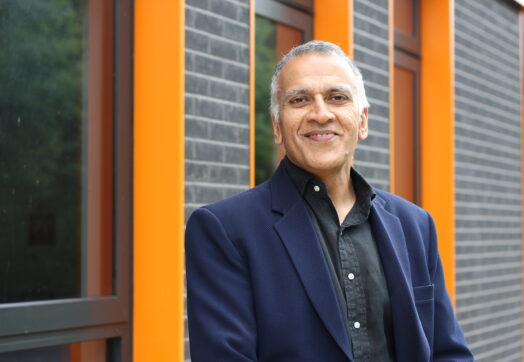
Sukhwinder Shergill

Sukhwinder Shergill

Professor of Psychiatry at Kent and Medway Medical School (since 2021) and Professor of Psychiatry and Systems Neuroscience at the Institute of Psychiatry, Psychology and Neuroscience, King’s College London. He trained in medicine at University College London and completed his higher psychiatry training at the Maudsley Hospital. He obtained his PhD at King’s College London and was promoted to Professor in 2014. He leads the Cognition, Schizophrenia and Imaging Laboratory (CSI-Lab), a multidisciplinary research group. He founded the King’s Centre for Innovative Therapies, fostering collaboration between academia, clinicians, and industry. He has published over 250 peer-reviewed papers, secured extensive grant funding, and supervised more than 20 PhD students.

Valderia Lopes

Valderia Lopes

XxxxxX