QUILOMBOLA COMMUNITIES IN BAHIA
BOQUEIRÃO QUILOMBOLA COMMUNITY
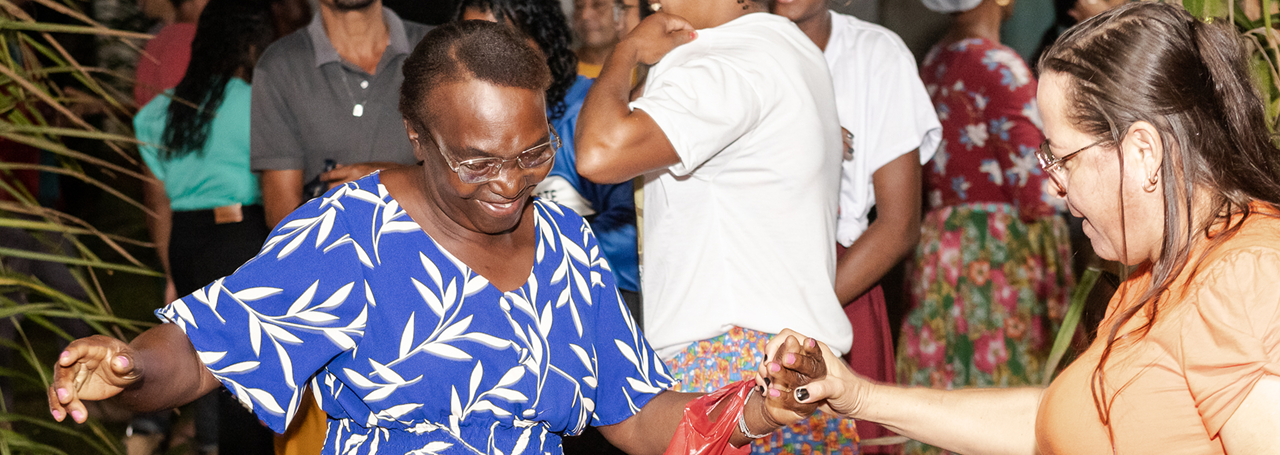
Boqueirão is a quilombo community certified by the Palmares Cultural Foundation in 2011, located in the municipality of Teolândia, in the southern part of Bahia. It is surrounded by lush nature that has been preserved from large-scale ecological exploitation.
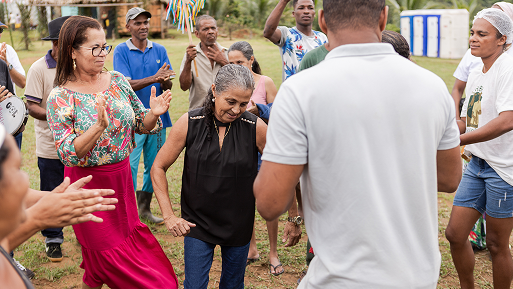
The community is made up of about 130 families, most of whom are family farmers who grow cocoa, bananas and cassava, among other crops. Boqueirão is known for its profound cultural richness, manifested in the cultivation of different arts and crafts transmitted intergenerationally by masters and mistresses of knowledge – traditional childbirth, musical tradition based on popular and sacred songbooks, dances and the legacy of oral literature, expressed through the transmission of myths and tales (proverbs, legends, riddles, etc.) as well as abundant traditional meteorological knowledge.
Cultural life is closely linked to the spiritual dimension of the community, which is predominantly Catholic. Religious manifestations associate popular Catholicism with the cult of caboclagens and the figures of rezadeiras and erveiras, who safeguard ancestral knowledge about the use of medicinal plants and herbs, displaying a deep traditional ethnobotanical and pharmacological knowledge. Despite all its natural and cultural abundance, the community faces significant challenges, characterised by the absence and/or limitation of public facilities – education, health and social assistance – access roads in good condition, work and income for the younger population, as well as the need for greater appreciation of cultural and artistic manifestations.
To speak of Boqueirão is to speak of peace, of living well
Of the richness we possess,
Of the richness of the water,
Of the beauty of nature.
The richness we possess, not of money, but the richness of peace,
The richness of calm, of the waters and the forests,
Where there are people with the gift of the wisdom of nature.
The purity that this place possesses,
Where in the world, no money can buy it!
(Vani, resident and community researcher at ORI)