CASE STUDIES
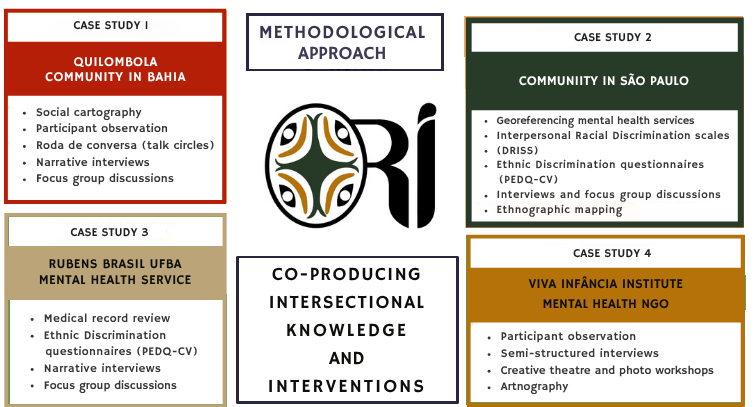
The case studies presented comprise the methodological approach of ORI, which seek to co-produce knowledge and intersectional interventions based on different community contexts and mental health services in Brazil. Each study uses qualitative and participatory methods, adapted to the specificities of each territory and social group.
Case Study 1:
Quilombola Communities in Bahia
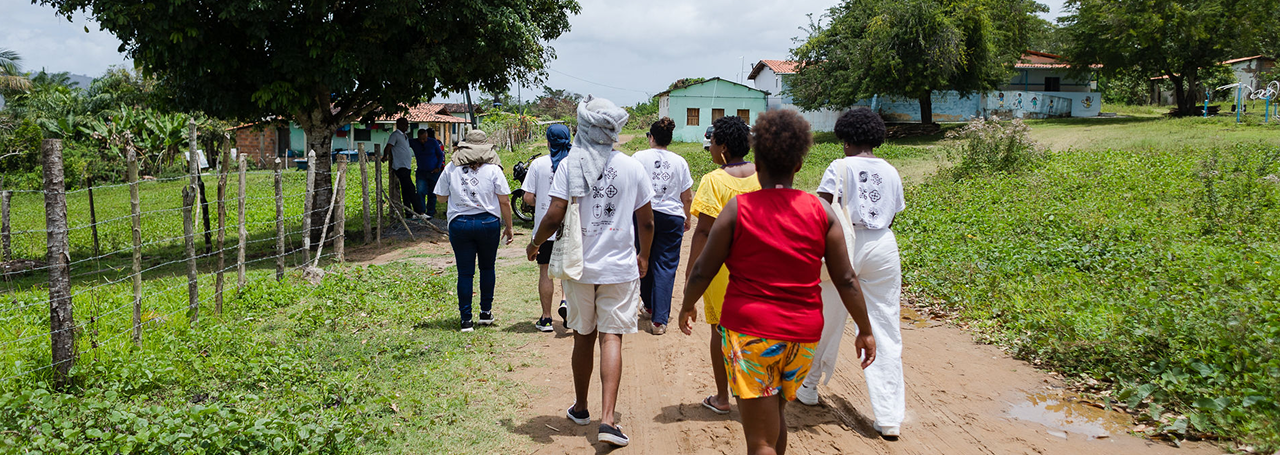
This study investigates the reality of three quilombola communities in Bahia (Rio dos Macacos, Engenho da Ponte and Boqueirão), using methods that value local knowledge and collective practices. Social cartography allows the territory to be mapped from the residents’ perspective. Participant observation and conversation circles help to understand community dynamics, while narrative interviews and focus groups explore personal and collective experiences related to mental health and discrimination.
Case Study 2:
Heliópolis in São Paulo
Focused on Heliópolis, a large urban center, this study analyzes how peripheral populations access and perceive mental health services. Georeferencing of services maps available healthcare provision and highlights territorial inequalities. Scales such as DRISS (Interpersonal Racial Discrimination) and PEDQ-CV (Ethnic Discrimination Questionnaire) are applied to measure experiences of discrimination. Interviews, focus groups, and ethnographic methods provide a deeper understanding of the barriers experienced by residents.
Case Study 3:
Rubens Brasil Mental Health Service, UFBA
Conducted at a public university service in Bahia, this study combines documentary analysis and user experiences. The review of medical records provides clinical and historical data on care. Questionnaires on ethnic discrimination, interviews and focus groups help identify how racial and structural issues influence mental health care within the service.
Case Study 4:
Viva Infância Institute – Mental Health
This study takes place in a non-governmental organisation dedicated to the care of children and adolescents. It uses creative and participatory methods, such as participant observation, semi-structured interviews, theatre and photography workshops, as well as artnography (an approach that integrates artistic practices into research). The aim is to understand how young people express and elaborate emotional, discriminatory and community experiences through art.