‘Orí’, a word of Yoruba origin, literally means ‘head’, but carries meanings that go far beyond the physical dimension. Orí is the mind, the psyche, the spiritual centre that guides each person’s inner journey, their capacity for self-knowledge, balance and care. In the imagination of Afro-Brazilian traditions, caring for Orí is caring for oneself, strengthening mental, spiritual and emotional health. At the same time, this care does not occur in isolation: it connects to roots, ancestry and the community that sustains and empowers the individual.
It is from this dialogue between the inner self and the collective that the motto of our group is born: ‘Care that comes from within and from our roots.’ From Within (from each person’s Orí): It is an invitation for each person to look at themselves, get to know themselves, respect themselves and seek their inner balance. From the Roots (of our history and community): It is the certainty that this care is sustained by the strength of our ancestors.
By choosing the name Orí, we evoke the symbolic power of care that arises from the encounter between the self and the collective, between the mind and ancestry. The group is thus a movement of listening, research and action that seeks to strengthen the mental health of Black communities and individuals in Brazil, of different ages and backgrounds, to produce robust evidence to influence public policy and contribute to the construction of more just, diverse and supportive societies.
The ORÍ group comes to you as a proposal for dialogue and empowerment, inspired by the profound knowledge of our ancestors. Our goal is to collaborate in mental health care, understanding that it is much more than the absence of disease; it is the integral well-being of our people, which involves mind, spirit, emotions and the strength of our community. Our starting point is the wisdom of the Yoruba people, one of the African matrices that strengthened our resistance in Brazil.
ABOUT
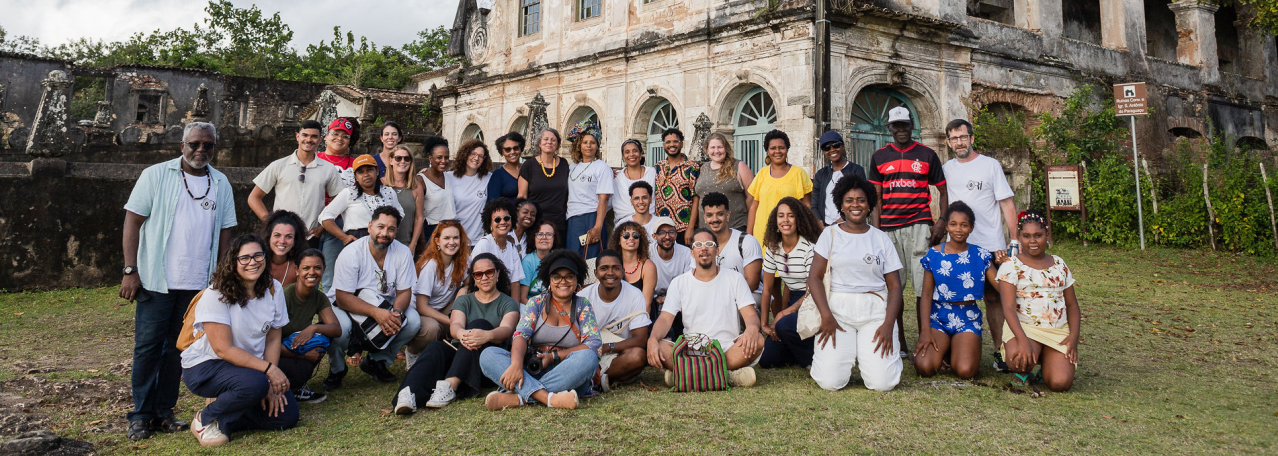
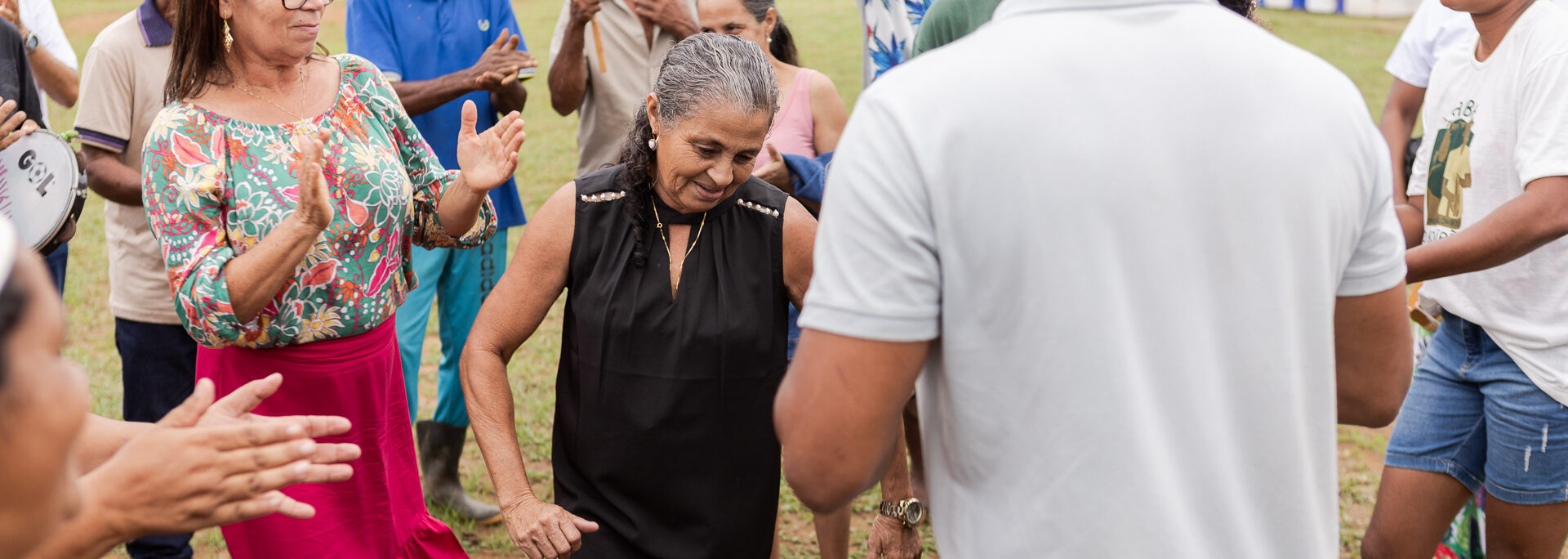
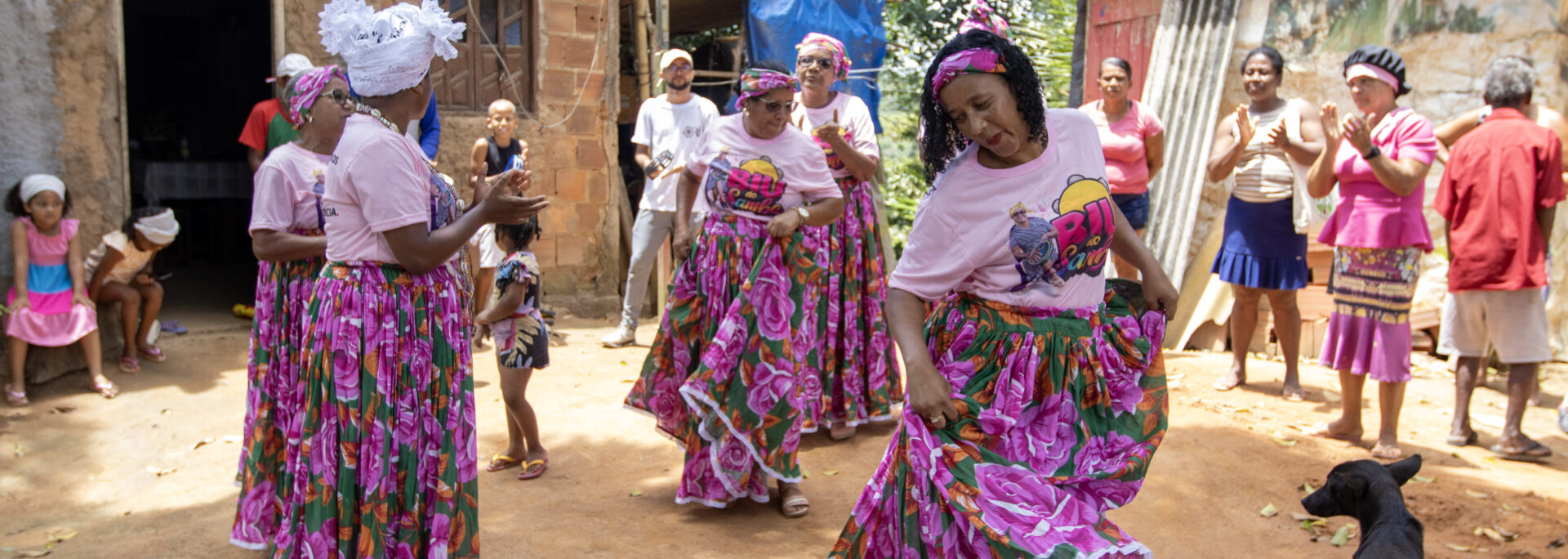
The ORÍ group – Racism and Social Inequalities in Mental Health in Brazil emerged as an urgent response to the deep scars left by structural racism and social inequalities in the country. It is well known that these inequalities not only cause psychological suffering, exclusion and violence, which directly affect the mental health of the black population, but also impact access to health services. However, it is also in the group’s partner communities – such as the quilombos of Rio dos Macacos, Engenho da Ponte and Boqueirão in Bahia, as well as the Heliópolis favela (São Paulo), Rubens Brasil University Medical Service (SMURB) and the Viva Infância Institute – that strategies of resistance, ancestral knowledge and collective strength emerge, rebuilding paths of care and belonging.
The group is the result of an international partnership between Brazil and the United Kingdom, involving universities, research centres, health services and community organisations, funded by the National Institute for Health and Care Research (NIHR). More than an academic study, ORÍ is an engaged research group that seeks to produce intersectional knowledge, train anti-racist professionals, and develop interventions that engage with local contexts, respecting and valuing the communities involved.

The choice of communities and institutions covered by ORÍ in Brazil was not random.
In Bahia, three case studies (following the logic of action research) are being developed, covering quilombola communities and two mental health services. Consultations with quilombola leaders (Quilombola Council of the Iguape Basin and other quilombola associations in other territories of the state) resulted in the selection of the communities of Boqueirão, Engenho da Ponte, and Rio dos Macacos. Among the common aspects of the three communities, the following stand out: precarious local infrastructure, difficulties in accessing health services in general or mental health services in particular, as well as flagrant cases of structural violence and environmental racism. On the institutional front, the choice of Instituto Viva Infância (care for children in situations of social vulnerability) and the SMURB Psychology Service (care for university students) was based on the recognition that both services represent exemplary cases of good practice in mental health, committed to inclusive care and the promotion of social and racial equity.
In São Paulo, the research will combine quantitative and qualitative methodologies, action research, ethnography, population surveys and geomapping, in addition to the construction of a relational mapping of the Heliópolis territory. The study seeks to understand how racism and other vulnerabilities affect the population, investigating experiences, trajectories, stigma, quality of life and barriers to accessing health and mental health services, social assistance and education.
In summary, the ORÍ Group – Racism and Social Inequalities in Mental Health in Heliópolis and Bahia, aims to generate robust evidence to recognise racism as a social determinant of health and mental health and to support more inclusive, culturally sensitive and territorially contextualised policies and practices.
These choices reflect the diversity of Black experiences in Brazil: traditional communities, peripheral urban territories and institutions.
The development of ORÍ will take place over four years, between 2024 and 2028, in a continuous process of dialogue with communities, data collection and analysis, joint strategy building and dissemination of results. In addition to producing knowledge, the project aims to intervene in reality, supporting community mental health campaigns, anti-racist training for professionals, the production of educational materials, artistic workshops and the creation of care networks. At all stages, Community Advisory Groups will play a central role, ensuring that local voices and needs guide the direction of the research.
OBJECTIVES
General objective
Produce evidence on how racism and social inequalities affect mental health in Brazil and develop effective interventions, adapted to the sociocultural context and committed to the needs of vulnerable black communities.
Specific Objectives
The group will be led across six major workstreams:
- Produce intersectional knowledge on the effects of racism on mental health
- Conduct research engaged with black communities, valuing local and traditional knowledge
- Co-develop interventions and training activities to improve the response of mental health services and educational environments
- Influencing public policy, acting at municipal, state and national levels
- Promote intercultural exchanges in Latin America and the Caribbean, encouraging good regional practices
- Develop sustainable research capacity by forming a multidisciplinary network between Brazil and the United Kingdom

FUNDERS
This research is funded by the National Institute for Health and Care Research (NIHR) (NIHR156517), with assistance from the UK Government to support global health research. The views expressed are those of the author(s) and do not necessarily reflect those of the NIHR or the UK Department of Health and Social Care.
https://www.fundingawards.nihr.ac.uk/award/NIHR156517
For further information about ORÍ, please contact us at ORI@warwick.ac.uk.
CONTACT